Prayer. Sounds simple...right? Then why, for so many, does it feel so complicated and distant? How is one supposed to "do" prayer right? Is Hebrew necessary? Do I just speak...to God?
Forget the idea that you need to know Hebrew or have some special knowledge. Jewish prayer is both structured and impromptu, individual and collective, performed multiple times a day in shul and as a one-off conversation in a moment of need.
We're here to help you get started.Let’s be honest here: The way we Jews pray is…strange.
Not only because the very idea of prayer—talking to a God who never talks back—is strange. But also because when we pray, we're required to recite large chunks of text, the same pages every day. Don't get us wrong: the words are beautiful and moving. But can even the most uplifting poetry continue to move us once it becomes routine?
And then there's the Shema, the central part of both the morning and evening prayer, and it, too, is curious. At their core, the words—"Hear O Israel, the Lord is our God, the Lord is one"—are a declaration of faith. Which seems redundant: why would a person take time to pray unless he or she were already all in, already convinced that they believed in God?
To help address these questions, Rabbi David Fohrman taught us, imagine you had a magical goldfish who could talk. Amazed, you'd sit by its fishbowl and tell it about your day. But while the fish understood English and could speak it reasonably well, it had absolutely no idea what you were talking about when you told it you're watching TV, say, or grocery shopping at the supermarket—the fish had never experienced any of these things, and never will.
This, more or less, is what it feels like for a human being to talk to God. Even if the Almighty spoke back, we wouldn't understand anything about His awesome existence. And God knows this, of course, which is why He gave us a different way to reach Him: Prayer.
And it begins, appropriately, with gratitude.
The first thing we say each morning as we wake up is Modeh Ani, giving thanks to God for giving us another day. But the prayer is asking us to be grateful for more than just another shot at achieving our own goals; it's reminding us of the much grander miracle, the miracle of creation.
It's almost like, Rabbi Fohrman explained, God was taking 13.4 billion years and rolling it all up into one amazing experience, the greatest Broadway show you've ever seen—the sun, the birds, the world and everything in it kicks off anew, just for you. And when you see a great show, you stand up and you applaud.
Which, if you think about it carefully, is precisely what the Shema is: not so much a declaration of faith but a personal thank you note from us to God. Because creation isn't something we can just believe in; creation is something we must experience for ourselves, not with our brains but with our eyes that see the light and our nose that smells the flowers and our skin that feels the warmth of the sun or the coolness of the air. We feel all that because we, too, are part of creation, here every day to both witness and be a part of this miracle.
And if you understand this, you understand, too, why Jewish prayer was designed as a series of long, repetitive readings.
It's because it's all too easy to lose track of the wonder of creation, a wonder we experience every single day. Eventually, we just wake up in the morning, and drink our coffee, and read the papers, and rush to check our phones, and don't even notice that the entire world around us woke up anew to another day of infinite possibilities. And the best way to re-enchant the world is to turn amazement into routine: when we wake up every morning and read words of awe and wonder, we make gratitude a habit.
Only after we've done that can we turn to the core of each daily prayer—the Amidah, or a series of asks we make of God. Their order is inspiring. We begin by meriting our ancestors, acknowledging that all that we have we owe to the men and women who came before us and made it all possible. Then, one after another, we ask for all the bounties of life, in ascending order: Let us know things, so that we're mindful and thoughtful and not merely ravenous like the beasts; let us repent whenever we've erred; banish all the inner demons—self-doubt, say, or anxiety—that keep us from living up to our full potential; give us health, and give us earthly success; give us a community governed by good counsel and just leaders; destroy the wicked and reward the righteous; accept our prayers and bless us with Your mercy.
There's a lot more to it, of course, but like all things true and profound, prayer, too, can't be described in the abstract. It must be practiced.
The Shema is the most important prayer in Judaism — a declaration of faith recited every morning and evening. Our Shema Initiative helps you make it part of your daily life.
Get Started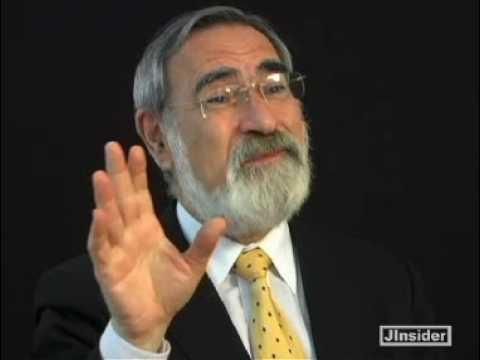

There is an extraordinary prayer. We say it right at the beginning of this service, every single morning. Ribbono shel olam [Master of the Universe]. What are we? We're nothing. What is our life? What is our righteousness? What is our kindness? We're nothing. Umottar ha'adam min ha'beheimah eyin ki hakol havel. We are nothing. Gornisht [Yiddish for 'nothing']. And then it says aval anachu amchah bnei veriteicha. We are Your people, the children of Your covenant.
Individually, we may be nothing. But collectively, we are part of something great.
And whenever I read that prayer, I think of a wonderful sentence written after the Six Day War by the late Milton Himmelfarb. He said, "Just think about it. Jews are a tiny people. The sum total of world Jewry is smaller than the statistical error in the Chinese census. And yet great things happen to us and around us."
And it is that privilege, of not being individually great, but part of a people to whom great things happen. That is a tingle moment for me every morning when I say that prayer.
- Rabbi Jonathan Sacks

Understanding Prayer: Spiritual Exercise (1/10)
Understanding Prayer: Thanking & Thinking (2/10)
Understanding Prayer: Praise (3/10)
Understanding Prayer: The Deepest Call (4/10)
Understanding Prayer: Family (5/10)
Understanding Prayer: Mistakes (6/10)
Understanding Prayer: Growth (7/10)
Understanding Prayer: Holy Words (8/10)
Understanding Prayer: Framing Beliefs (9/10)
Understanding Prayer: The Soul's Language (10/10)

Don't know Hebrew? Don't worry. Our Shema Initiative includes a FREE Hebrew Reading Crash Course.
Get StartedLearn how to pray with Simchat Torah Challenge's own Rabbi Lawrence Hajioff
The Prayer That Stands Above All - The Shema Initiative
The Shema (Read Along) - The Shema Initiative
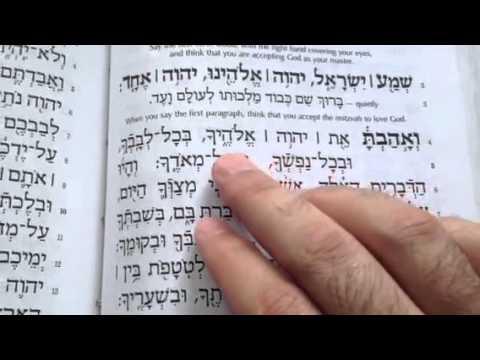
Practice reading the Shema
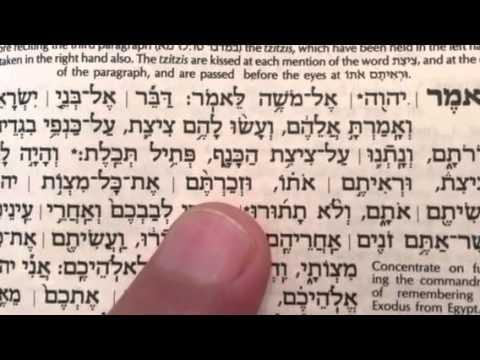
Hebrew Reading Practice: Shema third and final paragraph
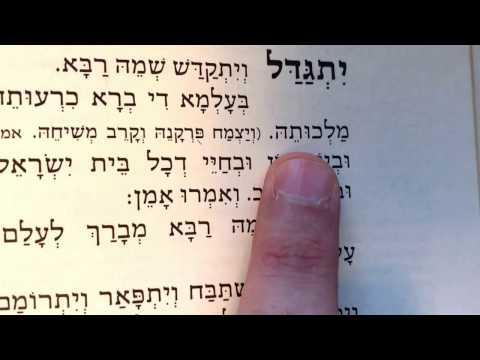
Practice Reading Hebrew: The Mourners Kaddish
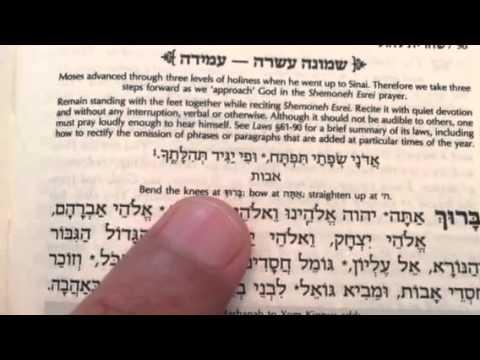
Hebrew Reading: The Amida Part 1. An Introduction
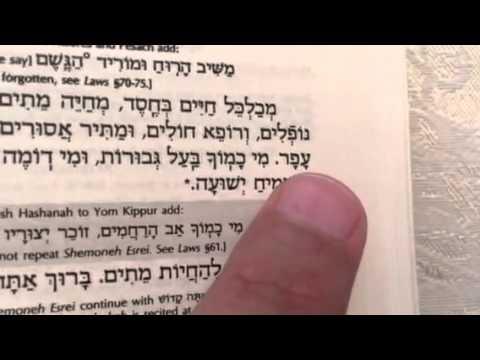
Hebrew Reading: The Amidah Part 2
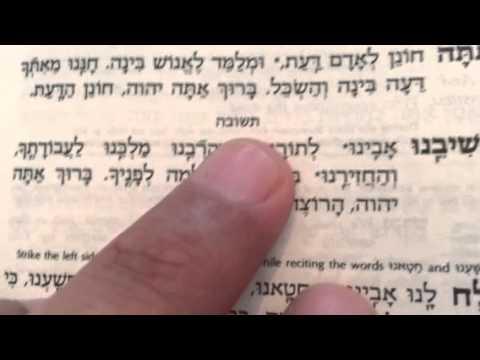
Hebrew Reading: The Amidah Part 3
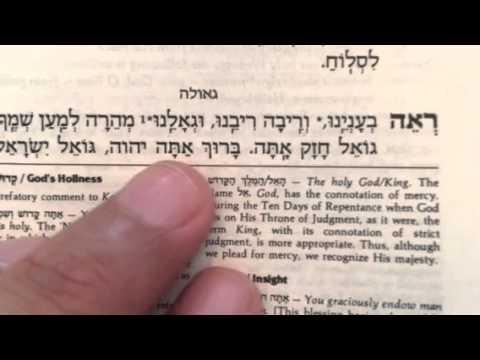
Hebrew Reading: The Amidah Part 4
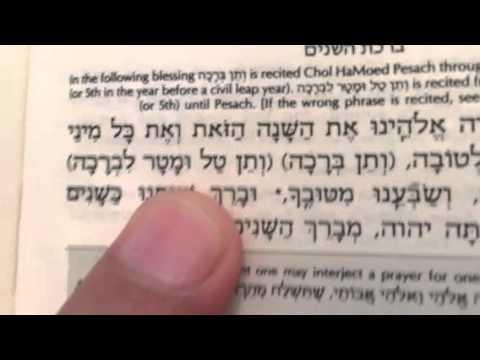
Hebrew Reading: The Amidah Part 5
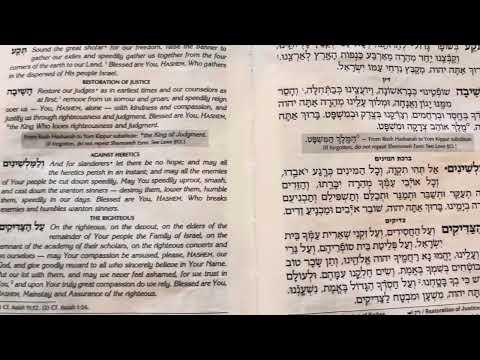
Practice Hebrew reading. The Amidah Part 6
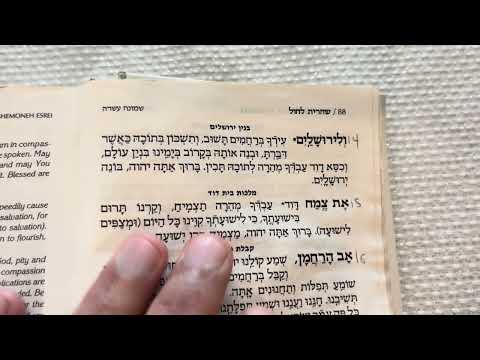
Practice your Hebrew reading. The Amidah Part 7
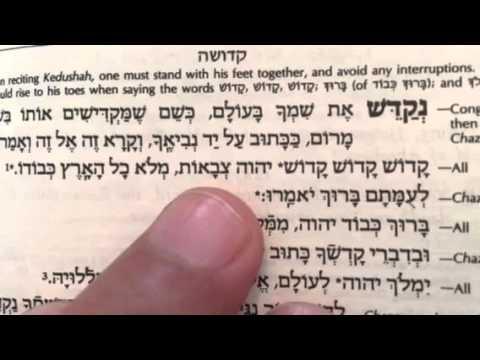
Practice Hebrew Reading: Kedusha in the Amida prayer.
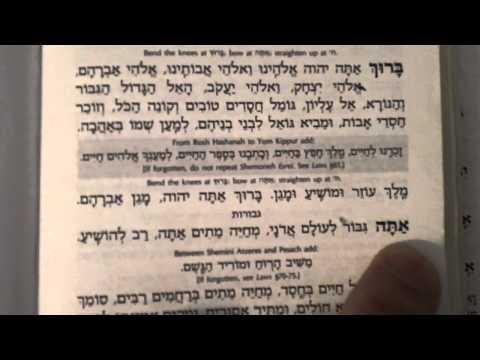
Musaf Shabbat Page 462
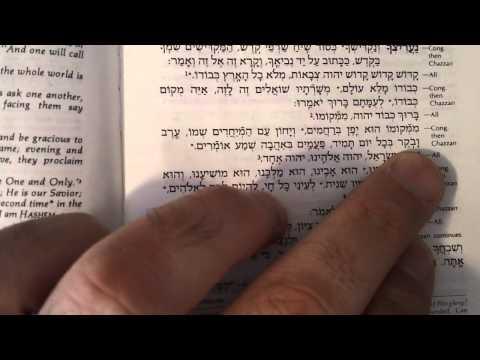
Shabbat Mussaf Page 464